
Open the full-size graveside honors guide
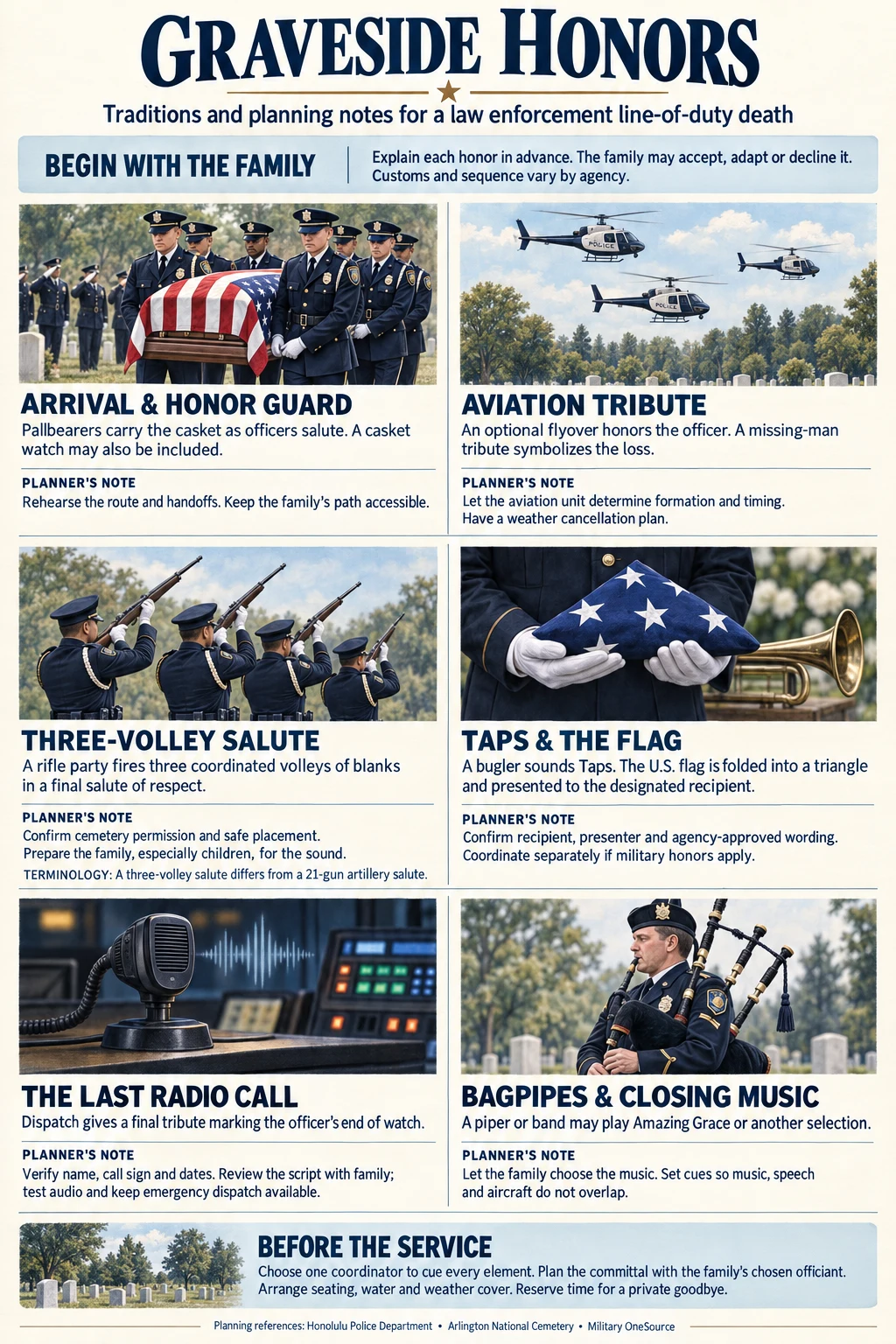
The honors at a graveside can carry deep meaning. Start by explaining the choices, sounds and sequence to the family. This visual guide is a planning aid, not a mandatory order of service.
Begin with the family
Explain each honor in advance. The family may accept, adapt, or decline it. Customs and sequence vary by agency. A chaplain can help the family understand the choices without treating the service as a checklist they must complete.
Arrival and honor guard
Confirm who will meet the hearse, carry the casket and guide the family to their seats. Depending on agency practice, the honor guard may provide a casket watch, colors and salutes. Explain what the family will see and when they will be asked to move.
Aviation tribute
If a flyover is offered, discuss it with the family before coordinating aircraft, timing and permissions. Weather, operational needs and local restrictions may change the plan. A missing-man formation is one possible tribute, not a required element.
Three-volley salute
A rifle party may fire three volleys of blanks. This is different from a 21-gun artillery salute. Prepare the family for the sound, especially children or people who may find sudden noise distressing. The agency determines authorization and safety arrangements.
Taps and the flag
Discuss whether Taps will be played and how the flag will be folded and presented. Confirm the recipient, presenter and wording beforehand. Use the agency’s authorized ceremony; military presentation language should not be assumed to apply to every police funeral.
Last radio call
A dispatcher may deliver a final tribute or end-of-watch call. Agree on the wording and whether it will be broadcast, recorded or read at the service. Explain the pauses and silence to the family in advance, and arrange support for the dispatcher taking part.
Bagpipes and closing music
Bagpipes, a solo musician or another selection can close the gathering. Ask what music the family wants. “Amazing Grace” is a familiar choice, but it is not a requirement.
Before the service
Walk through the sequence with the family liaison, funeral director, chaplain, honor guard and dispatcher. Confirm accessibility, seating, weather plans and the person responsible for each transition. The purpose is to make the service understandable and manageable for the people who are grieving.